

Philadelphia’s Waste Problem: What Are We Really Throwing Away?
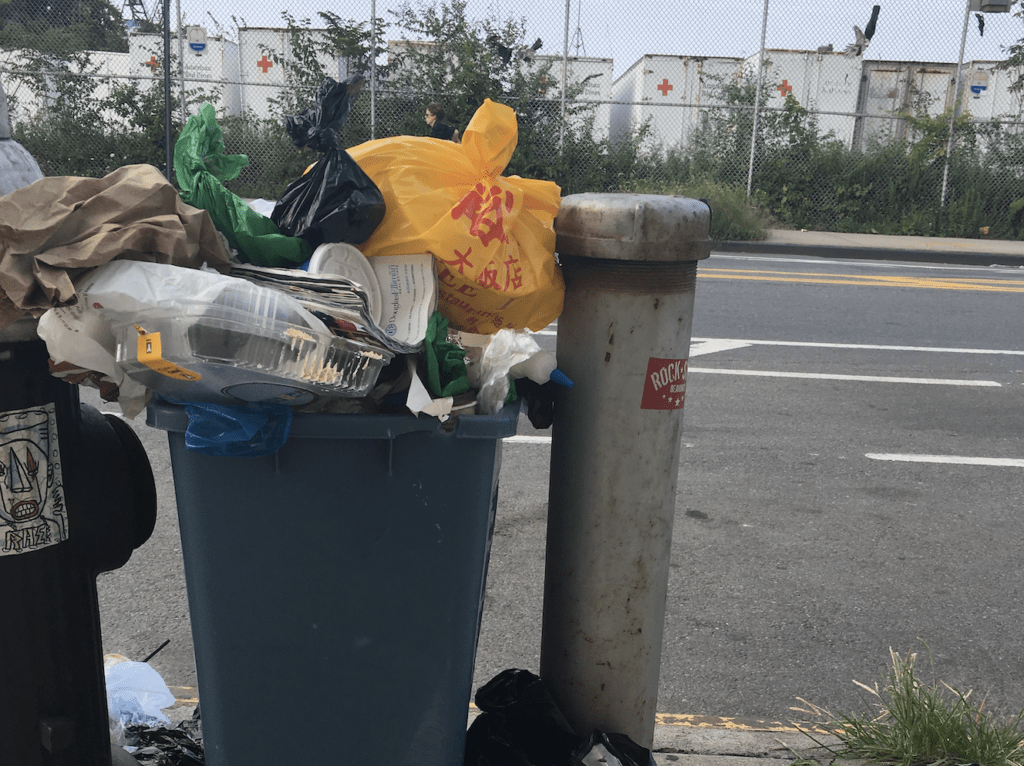
Philadelphia generates nearly 1.3 million tons of trash every year. Where it goes and who pays the price is a story most residents have never been told in full.
The Stop Trashing Our Air Act: Stalled, Not Dead
Introduced by Councilmember Jamie Gauthier in September 2025, the Stop Trashing Our Air Act (Bill #250768) would ban Philadelphia from contracting with companies that incinerate the city’s solid waste or recyclables. The bill cleared the Environment Committee with a strong 5-1 vote on November 17, 2025. When it came to a full Council vote on January 22, 2026, Gauthier pulled it at the last minute when other members asked for more time. It was placed back on the April 9, 2026 agenda but as of April 10, it had still not been voted on. The bill is stalled, not dead. But the clock is running. Philadelphia’s current waste contracts expire June 30, 2026.
What Actually Happens to Philadelphia’s Trash
37% of Philadelphia’s trash is burned, primarily at the Reworld (formerly Covanta) Delaware Valley incinerator in Chester, PA, the largest trash incinerator in the United States, which burns up to 3,500 tons of trash and industrial waste daily. Nearly one third of everything burned there comes from Philadelphia. The rest is trucked up I-95 to Waste Management’s Fairless Landfill in Falls Township, Bucks County, under a contract in which Waste Management controls 70% of the city’s waste contracting with no competitor able to handle that volume. The city has budgeted over $35.3 million to Waste Management and over $12.8 million to Reworld in the 2025 proposed budget. When trash is incinerated, 70% becomes air pollution and 30% becomes toxic ash which is then sent to a landfill anyway. Philadelphia is not choosing between incineration and landfilling. It is choosing between incineration plus landfilling and landfilling alone.
The Health Consequences Are Documented
Chester is a majority-Black city. Chester’s pediatric asthma rate is four times the national average, according to the city’s own Health Commissioner, Dr. Kristin Motley. Philadelphia itself ranked 4th worst “asthma capital” in the nation in 2025, according to the Asthma and Allergy Foundation of America. A life cycle assessment commissioned by Delaware County found that burning trash and landfilling the resulting toxic ash is 2.3 times more harmful to human health and the environment than direct landfilling. The Sanitation Department’s own testimony acknowledges that ending incineration would cost an additional $6.5 million per year, just 0.1% of Philadelphia’s $6.84 billion citywide operating budget. Meanwhile, Reworld spent $45,000 lobbying City Council and Mayor Parker’s administration in the final quarter of 2025 alone. Chester residents cannot afford a lobbyist.
Philadelphia Spends to Dispose, Not to Reduce
Philadelphia spends $180 million a year on sanitation but not a single budget line is set aside for waste reduction. The entire budget is organized around moving trash from one place to another, not stopping it at the source. Of that $180 million, $107 million goes to employee compensation and $67 million covers contracted disposal and recycling processing. Waste reduction, reuse, and composting are afterthoughts, not investments.
Other cities have made a different choice. San Francisco built its zero waste program on approximately $7 million annually for waste reduction programming alone and achieved a 77% waste diversion rate, the highest in North America. Seattle’s residential recycling capture rate now stands at 74%, driven by sustained investment in composting infrastructure. Denver’s pay-as-you-throw pricing model identified composting as capable of diverting 50% of landfill-bound material. New York City committed $7 million annually just to community composting partners, recognizing that food waste is where the greatest return lies. The return on that investment is real: reduced disposal costs, revenue from recyclable materials markets, local green jobs, and lower public health costs.
Philadelphia pays $100 per ton to process recyclables versus $79.91 per ton for general waste disposal, a pricing structure that makes recycling more expensive than burning or burying. Philadelphia’s recycling rate for Fiscal Year 2025 stood at 13 to 14%, against a national average of 32% and a Pennsylvania target of 35%. These are not the numbers of a city investing in its own future. They are the numbers of a city that has been paying to burn the problem away and sending the bill to Chester.
Philly Unwrapped: Growing the Movement
The path forward requires both policy change and community power. That is the conviction behind Philly Unwrapped.
On April 14th, we held our third Philly Unwrapped community education and engagement event at PHMC. We opened with Dr. Ruth McDermott of Physicians for Social Responsibility, who set the stage by grounding the conversation in public health, connecting Philadelphia’s waste and incineration practices directly to the health consequences borne by our communities. From there, ECHO and Clean Water Fund’s Rethink Disposable program walked participants through the waste reduction toolkit, offering practical resources for residents and businesses ready to move beyond single-use. The event closed with a Trash Academy participatory learning session, where community members could engage directly, ask hard questions, and begin building the shared knowledge that turns awareness into action.
Philly Unwrapped is working to grow a local movement where businesses are supported with both the education and the resources they need to move toward waste reduction. Our vision is to build local reuse infrastructure right here in Philadelphia but we cannot do it without food businesses coming to the table, and we cannot do it without our broader community showing up alongside them.
The city will not change its contracts, its budget, or its priorities until residents and businesses make clear that the status quo is no longer acceptable. That starts with knowledge, and it grows into action.
