

What We Learned at the Beyond Plastics Affiliate Conference About Plastic Pollution and Environmental Justice
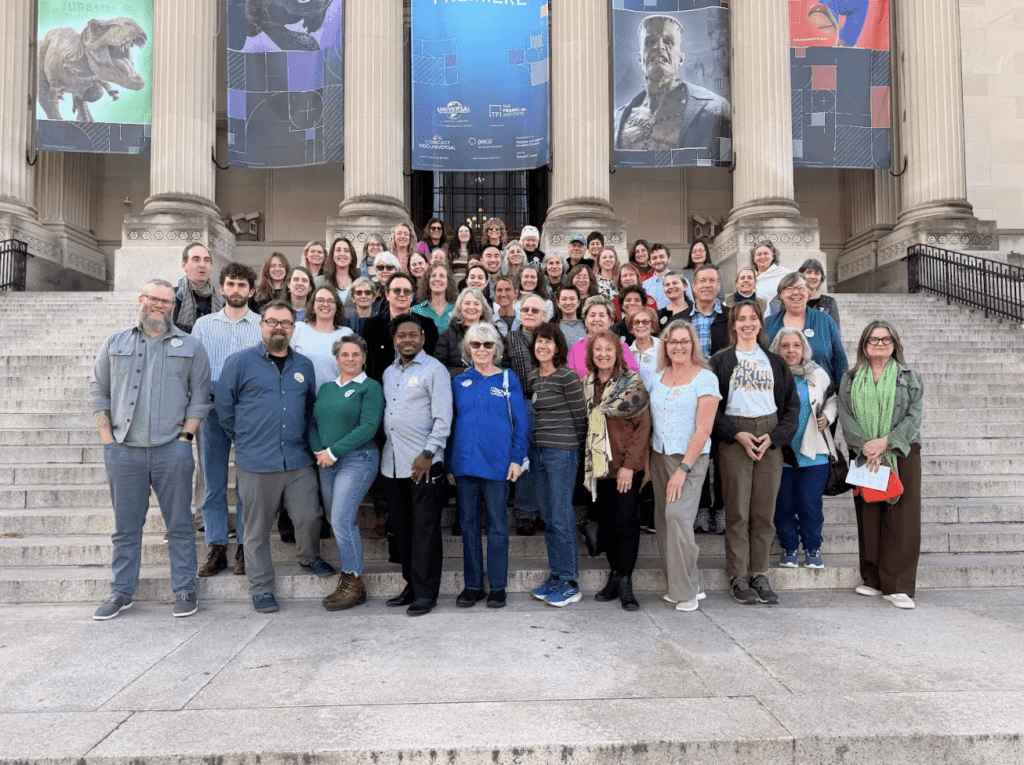
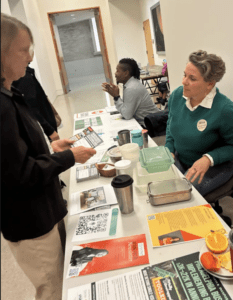
We recently attended—and tabled at—the Regional Beyond Plastics Affiliate Conference, and it offered something we don’t often get in the sameroom: a clear-eyed look at the problem and a grounded sense of how to actually move forward.
At a high level, the conference made one thing obvious, we’ve been stuck in the wrong conversation. For years, the focus has been on managing waste: recycling more, disposing better, making the system slightly less bad. But we now have sufficient data that this approach isn’t working because it doesn’t address the root issue which is overproduction. Plastic production is accelerating, tied directly to fossil fuel expansion, and the U.S. continues to outpace much of the world in both consumption and waste generation.
The conference showcased a strong focus on strategy. We learned how campaigns actually win—through coalition building, local policy, and organizing that’s both persistent and targeted. Tools like power mapping helped break down how to identify decision-makers and the people who influence them. Sessions on media engagement made it clear that storytelling, done well, can shift public narrative and political will. And across the board, there was an emphasis on practical, winnable policies: plastic bag bans, “Skip the Stuff” ordinances, small wins that build toward systemic change.
We also heard about real progress. Communities passing legislation. Lawsuits successfully stopping plastic pellet pollution in waterways. Local groups build momentum that scales beyond their regions. This illustrates that participation leads to effective change.
And underpinning all of it was a hard truth: we cannot recycle our way out of this. Recycling is not keeping pace with production, and industry-backed fixes like “advanced recycling” are proving to be expensive and polluting distractions. Incineration, often framed as a solution, is even more concerning, producing toxic emissions and hazardous ash while delaying the transition to real upstream solutions like reduction, reuse, and refill.
But the most grounding and frankly, unavoidable part of the conference was the focus on environmental justice.
Sacrifice zones are not an abstract concept. Sacrifice Zones are real places where Black, Brown, and low-income communities are forced to live alongside a dense concentration of polluting infrastructure. These patterns are the result of policy decisions that have, for decades, determined who benefits from our systems and who bears the cost.
You see it in Chester, PA, our neighboring city, a small city turned into a regional waste hub, home to the largest trash incinerator in the country. Most of the waste burned there doesn’t come from Chester. And yet, the residents live with the consequences. Children in Chester experience asthma rates five times the national average.
You see it in Louisiana’s “Cancer Alley,” where frontline communities, alongside organizers like The Descendants Project, are fighting petrochemical expansion. You see it in Newark’s Ironbound neighborhood, where residents continue to push back against decades of industrial overconcentration.
And if it feels distant, it’s not. Pollution doesn’t stay contained. The same system concentrating harm in these communities is connected to all of us, through air, water, and the materials we use every day.
Which brings this directly to Philadelphia.
As of April 7th 2026 Council Member Gauthier has rescinded the Stop Trashing Our Air Act Bill because there was not enough support in our city council. Our work is far from being done. The reason our council members are on the fence about these issues is because they do not hear often enough about this issue from their constituency.
Incineration is one of the most polluting and costly ways to manage waste, producing toxic air pollution and hazardous ash while undermining real solutions and yet, some decision-makers are still not treating this with the urgency it demands.
The mayor wants to do more studies at this point, we don’t need more studies. We need action. Streets has said they would not sign a long term contract and would enter into a one year agreement with Reworld/ Covenant while alternatives are being evaluated. This is why reuse is critical right now. We need alternatives to drastically slash locally generated waste.
If Philadelphia continues this contract, we are making a choice to ignore the data, to delay real solutions like reduction and reuse, and to continue placing the burden on a community that has already carried too much.
